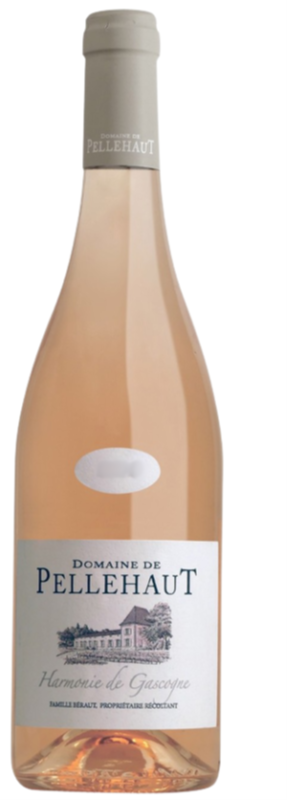
Domaine de Pellehaut Harmonie de Gascogne Rose 2023
A delightfully fresh Côtes de Gascogne rosé. Radiant coral hue, aromatic layers of strawberry and poppy, with a crisp, fruity finish. Bright, approachable, and continuously crowd-pleasing.
Domaine de Pellehaut Harmonie de Gascogne Rose 2023
A delightfully fresh Côtes de Gascogne rosé. Radiant coral hue, aromatic layers of strawberry and poppy, with a crisp, fruity finish. Bright, approachable, and continuously crowd-pleasing.
This rosé pours a brilliant coral colour that immediately captivates. The nose is delicate yet inviting: poppy, strawberry, and raspberry sit harmoniously with a hint of orange blossom for added freshness. On the palate, flavours of red berries mingle with subtle florals, delivering a balanced and lively finish.
Crafted from a blend of Cabernet Sauvignon, Merlot, Syrah, Malbec, and Tannat, this rosé comes from one of Gascony’s oldest estates, managed by brothers Martin and Mathieu Béraut, now in their 300th year of family stewardship. The vines thrive on slopes with excellent sun exposure, protected by the Pyrenees, and benefit from a biodiverse, polyculture landscape that includes livestock and cereals alongside the vineyards.
Serve chilled (8–10 °C) as a restorative aperitif or alongside fresh salads, grilled pork, shellfish, tapas, or light poultry dishes. It’s a versatile rosé built for easy enjoyment.
Wine characteristics
France
Cabernet Sauvignon, Merlot, Syrah, Malbec, Tannat
2023
Domaine de Pellehaut
13.0%
Standard - 75cl
Cork
Tips
How to serve?
Serve chilled
Goes well with
Aperitif
Goes well with
Fish
Goes well with
Pork
Goes well with
Poultry
Goes well with
Salads
Goes well with
Shellfish
Goes well with
Tapas
Discover
Situated on the slopes surrounding Château de Pellehaut, at an elevation of over 180m, the vineyard is set in an ideal terroir with maximum exposure to the sun. Protected by the Pyrenees, the Gers region also has the advantage of relatively low rainfall in summer.
"Pellehaut" gets its name from the Roman or mediaeval word pila (meaning any kind of solid, pillar-like construction). The presence two kilometres away of mosaics decorated with vines at the Gallo-Roman site of Séviac bears witness to the fact that vines were already grown at Pellehaut in Roman times.
The vineyard forms the heart of this traditional farming business run by Martin and Mathieu Béraut. The two brothers have conserved the balance of crops introduced by their father, Gaston, 50 years ago – an example of Gascon-style polyculture, a mix of vines, beef livestock and cereal crops.
The vines grow on the tops of the low, rounded hills, while the lower slopes are reserved for the cattle and cereal farming.The combination of the dung from the Blondes d’Aquitaine cows and grape pomace makes prime compost for the vines.These two complementary activities mean that they are able to maintain the organic matter present in the vineyard’s soils while limiting the use of artificial fertiliser. This is typical of the spirit in which the Pellehaut estate is farmed – respect for ancestral methods and natural balance combined with scientific precision and a constant concern for quality and innovation.
Related articles
Reviews
We value your opinion!
Please take a moment to leave a review and help others choose the perfect product.